
EASY DOES IT
If England don't use their noddle a bit in the next two Tests, McCullum will be out of a job

The Ashes winning moment
“Too easy.” It’s a standard Aussie response when you get out of a cab and thank the driver or pay the waiter for a coffee. And yes, they’ve been saying that ad nauseam this week after retaining the Ashes in just 11 days of cricket. England made it “too easy.” They were badly prepared and played a lot of error-strewn, naïve cricket. It’s been devastating to watch for all of us, especially those who have stumped up their hard-earned cash (including me) to be here.
But no I don’t want Brendon McCullum to resign or be sacked, and it sounds as if he’s keen to carry on (see the quote below.) Good. He was humble in his post-match analysis and admitted mistakes were made in the preparation and they would do it differently next time. The decision not to play any proper warm-up matches before the series began was a grave error. Yes they played a game at Lilac Hill against the Lions, but that was the equivalent of the Oxford and Cambridge boat race crews having a ittle paddle on the Serpentine in preparation the race. It has left England playing catch-up ever since.
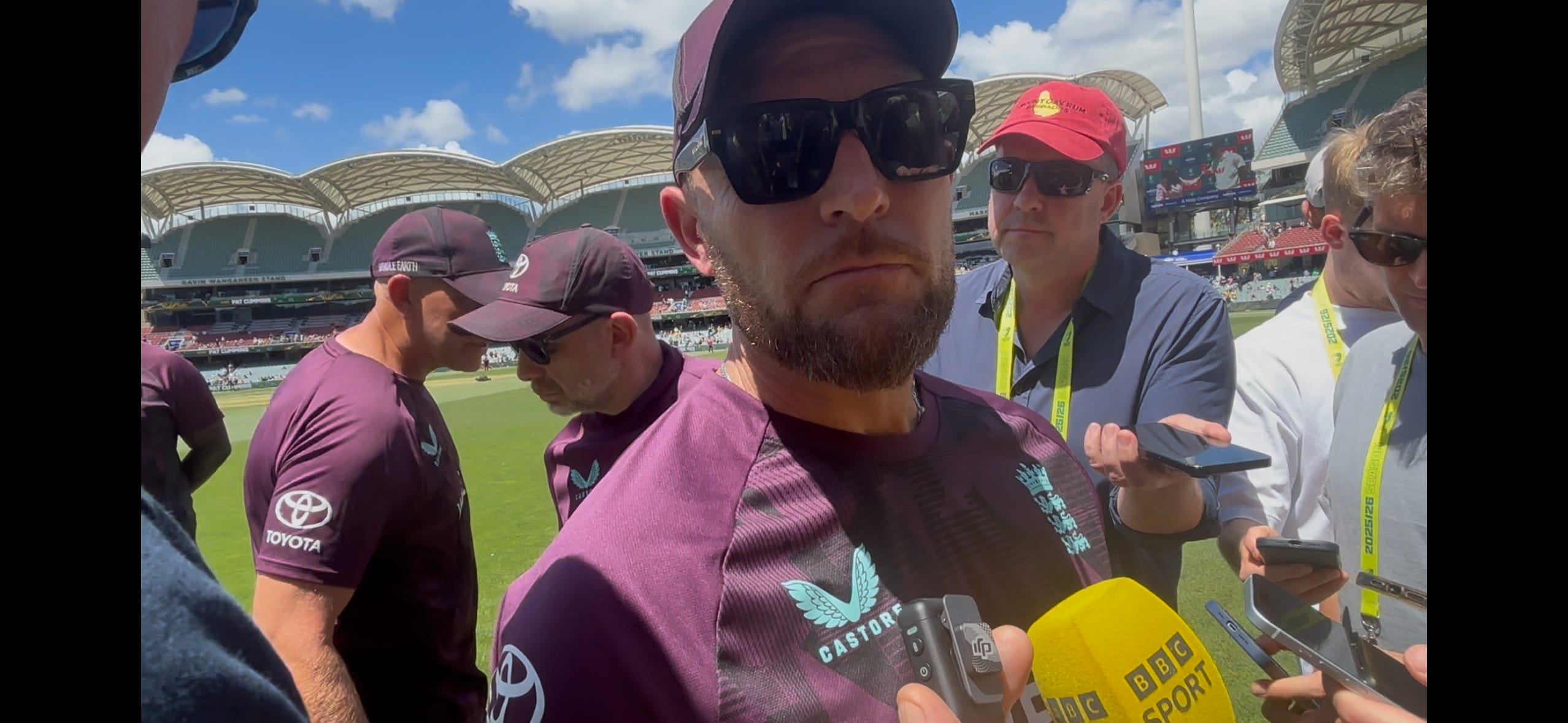
Overall McCullum has taken a different approach to the one meticulously constructed by Andrew Strauss and Andy Flower 15 years ago. We highlighted that before the tour but gave England coach the benefit of the doubt as he is a good man, and he was trying to depressurize the players, and a lot of his influences on English cricket have been beneficial.
The problem has been they have taken some of his philosophies too literally and failed to make sensible decisions of their own. Some of their shots have been shocking (and Harry Brook admitted as much.) But I don ‘t actually blame the coach for that, I blame the players and their lack of awareness of what Test cricket really is. It’s called ‘Test’ cricket for a reason.
It’s not a stroll to the middle and play a few shots and see how it goes. It’s psychological warfare on grass. It’s an examination of skill and temperament and what’s going on between those two ears. It’s a barometer of your nation’s sporting infrastructure. It’s a trial of stamina and resilience and individual and collective awareness. It means something (though in reality it doesn’t mean as much to the Poms as it does to the Aussies: already the local TV ads are heavily populated by the Aussie players crowing about retaining the Ashes. If Joe Root was advertising chicken kebabs from a supermarket chain in England during Who Wants to be a Millionaire, would anyone watching actually know (or care) who he was?

The Aussies sing their team song ‘True Blue’ after retaining the Ashes
You’ve read the post mortems already and you’ll have a good idea of what went wrong. So what can be done? Well let’s focus on the batting for a minute (I’ve dealt with the bowling in my piece for the Sunday Times.) Too many big shots at the wrong time, applying the intent to “put the pressure back on the bowler” too literally. I’ll tell you something. Good Test bowlers don’t hate boundaries, they think that it was either a bad ball or the batsman was taking a risk and if he does it again he might get out. Good Test bowlers hate singles much more. Often it’s achieved off a good ball, and even more often it disrupts the bowler’s best laid plans. It allows the batsman they were focussing upon and building pressure on to get off strike. It’s infuriating.
The best batting advice I was ever given was by another New Zealander John Reid (the one that played for New Zealand in the 1950s and 1960s not his later namesake.) In his mid-50s, Reid was coach of the Northern Transvaal team I played for in the Currie Cup. As a team we were minnows, battling against the Big Fish of Transvaal, Natal and Western Province. He tried to make us bigger than the sum of our parts, as New Zealanders often do. So, as we collectively went out to bat against the mighty Transvaal attack, he said “just remember, after hitting a four, take a single.”
It was a sound philosophy from a man who – incidentally - was no slouch with the bat. He held the record for most sixes in a first-class innings (15) from 1962 to 1995 and made six Test hundreds in a 15-year Test career. It worked for a while, and we, a team of misfits crept up the Curie Cup table for a little while until we forgot our lines. But it wouldn’t be a bad mantra for England to abide by going forward. That’s another way to “apply pressure” on the bowlers, and it won’t make things quite so ‘easy’ for them.
Clearly something is very wrong with the product if England's losses of 16 out of the last 18 tests in Australia is anything to go by. Four years and we haven't developed a class spinner or more than two decent openers. We lack fast left arm over bowlers. The domestic season structure and the ECB's obsession with the 100 and too many other meaningful fixtures is not producing the right cricketers. We need a proper pyramidal structure for clubs and leagues feeding into counties. Otherwise we will lose heavily in India and Australia again and again.
By the start of the season, this will all be conveniently forgotten and we will go on in our complacent way.
Isn't it the coaches responsibility to instil the values of test cricket on his players? Whilst Brook has now plenty of test experience under his belt, he is still a young man. The role of a leader or coach needs to be to guide and mould these raw talents.