
NO BALLS NO SENSE
Rightly or wrongly, a no ball in T20 cricket is a cardinal sin. So why do bowlers keep committing them?

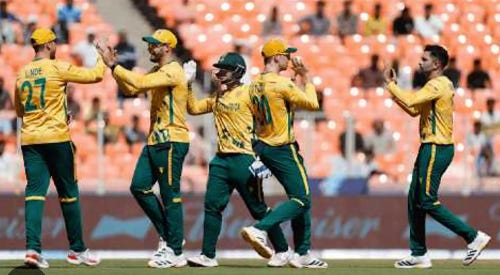
Watching the absurdly dramatic T20 World Cup match between South Africa and Afghanistan briefly reminded me of one of the lowest points in my career. Afghanistan, nine down, required 13 from the final over bowled by Kagiso Rabada to steal a vital victory in the group of death (as New Zealand are in it too.) Two tailenders had little chance of achieving their objective against the fast bowler with one of the finest strike rates in Test history.
But first ball Rabada oversteps. Now in most cricket no-balls are an unforced error, an unavoidable mistake (been there done that, too many times.) In white ball cricket where overstepping incurs a free hit, they are a criminal offence. It is arguable whether this is a fair penalty against the poor, beleaguered bowlers – it is bad enough in this game of intimidatory batting knowing that a (no) ball can’t take a wicket and has to be bowled again, without knowing that your follow up delivery affords a batter a free swing of the willow.
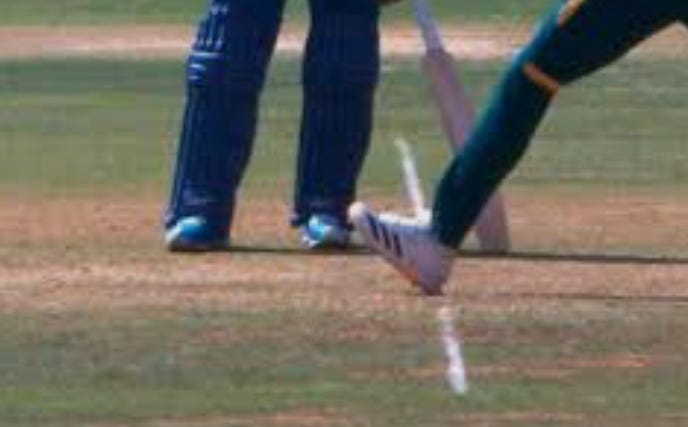
Rabada oversteps in the final over versus Afghanistan
But the bowlers know the rules. So the question is, why do some – like Rabada - push the line so hard that they risk overstepping? He has always been one of those bowlers who usually only has a heel behind the line. A fractional over stride in his run-up or a slightly increased delivery jump and he goes over the line. The possible increase in pace from releasing the ball 2cm closer to the batter is so negligible it makes no difference. The adrenaline of a tight finish is more likely to make you overstep. Why take such a risk when you have so much to lose? It doesn’t make sense.
Not only did Rabada no-ball once but twice in that final over – and frustrated as he obviously was – he only has himself to blame. Surely a player of his immense experience and intelligence could train himself to land further back and give himself a safety margin?
After years of suffering from a no-ball habit myself, I know what the problem is. You have grooved your run-up and action for years. It’s embedded in your DNA. Where you take off and land at the crease is cemented in your subconscious, in practice and in matches. It’s extremely hard to make even minor adjustments. Landing a few inches further back on the crease feels like yards. Its disorientating. Almost an out of body experience. The batter seems suddenly so far away.
