
PARTICIPATION NEGLECT
Despite all the investment into 'grassroots,' cricket's governing body is overlooking the basic necessity to get kids playing somewhere...anywhere.

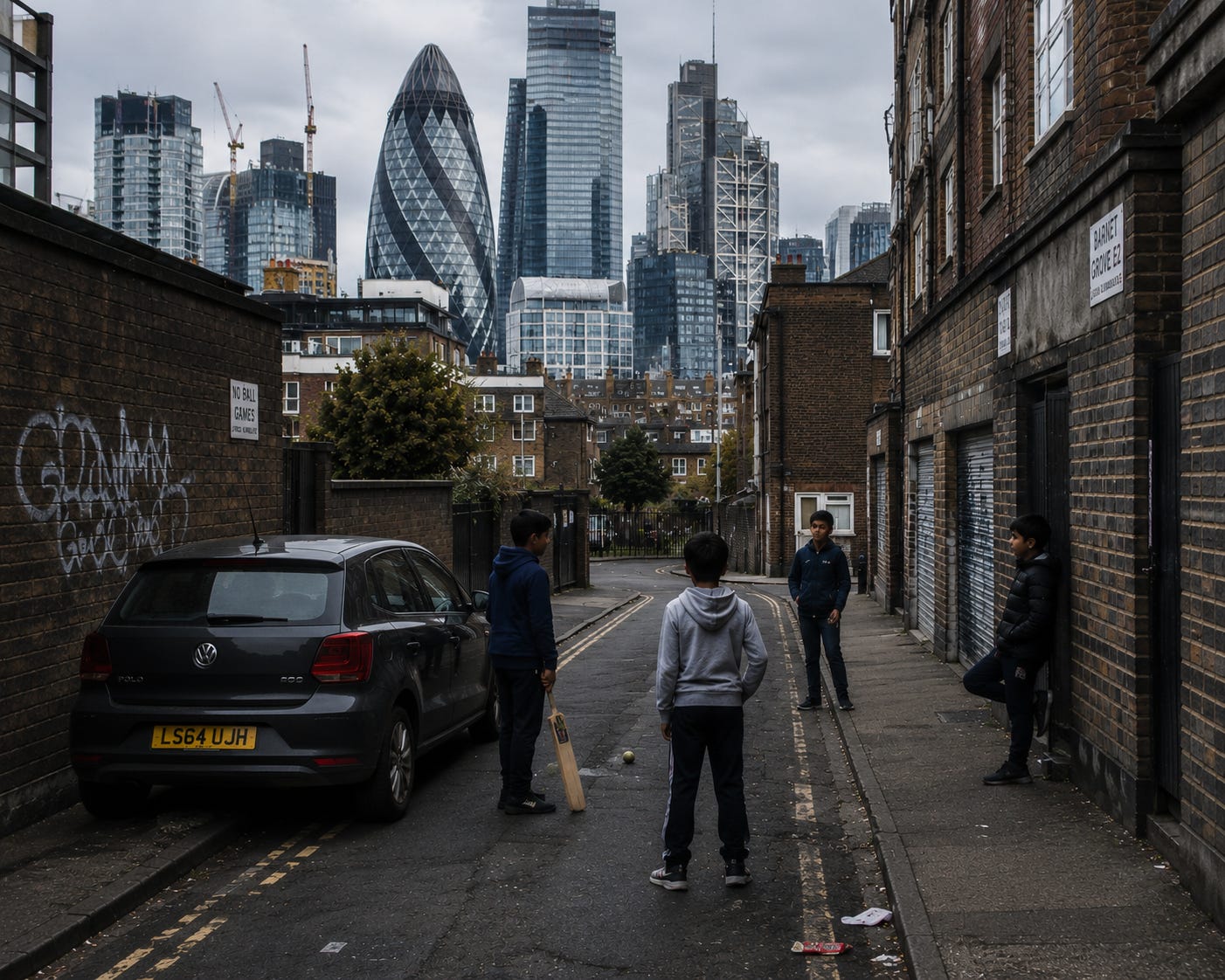
Last Saturday I was strolling round Shoreditch and Bethnal Green in east London. It’s classic inner city. High rise affordable flats, lots of council houses, a few cool boutiques selling designer gear cheek by jowl with vaping outlets and takeaways and neglected yards full of collapsed corrugated iron. An estimated 2 million people live here. At least a third of them are Asian/Asian British (particularly Bangladeshis.)
As you’d expect in such a densely populated area, outside space is limited. There are a few small tree-lined communal areas – you couldn’t call them gardens – largely dog toilets or weed-sharing zones. Occasionally you come across a small, caged playground, where a few kids are scuffling a football around or shooting at a basketball net. No one, of course, is playing cricket, despite a partially ‘converted’ population.
There are obvious reasons. The lack of visibility of the sport – seen by an (occasional) maximum of 2 million people on Sky (or sometimes on the BBC during the Hundred) – is one. Cost and/or availability of equipment (and appropriate surfaces) is another. And third is lack of space. You can’t play cricket on a bit of tarmac the size of a parking lot.
Well actually you can, and this is something the ECB needs to focus on as much as Chance to Shine, and disability cricket and employing the cricket regulator to investigate old men making tired, insensitive jokes at club dinners. Without youth participation there won’t in the future be cricket played anywhere except at Harrow and Eton.
Here are some facts, courtesy of Ed Fitzgibbon and his blog The Future of Cricket: “Fifty percent of sports fans are made by age 14. Those early fans spend more, stay longer, and bring their own children into the sport. A cricket fan with a playing background spends roughly four times more on the game than one who never played. And over ninety percent of people who start playing cricket do so before they are twelve. After that window closes, it is very difficult to bring someone into the game for the first time.”
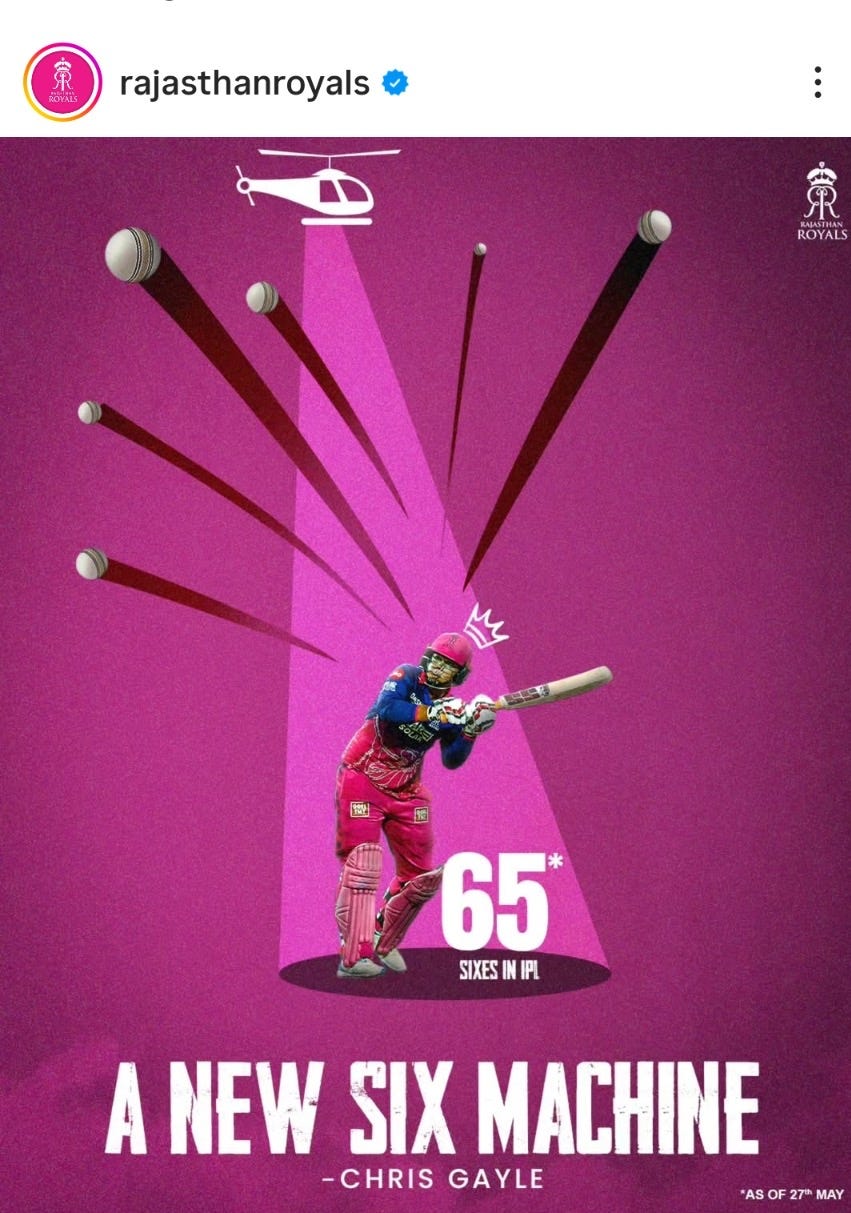
The value of getting young people to play a sport is immeasurable. “Participation is the first commercial layer of the modern sports business,” Fitzgibbon continues. “For decades, cricket has filed it [participation] in the soft drawer. Development. Grassroots. Pathways. Community.” Etc. QED the need to find a way to get those kids – especially those ones of Asian ethnicity already au fait with their teenage peer Vaibhav Sooryavanchi’s extraordinary exploits in the IPL (see video) – playing cricket.
C6 – the format I’ve written about before – is one way. It’s a very adaptable version that can be played in park or paddock or small, caged basketball court. All you need is a plastic ball, a (plastic) bat and a set of stumps, although a litter bin would do. Even a road cone. Heaven knows there’s enough of them about. You can play it with any number from 2 people upwards. Simple rules. Hit and run. Or hit it into one of six ‘zones’ delineated with cones, jumpers, backpacks, anything. And you score 10 and you don’t have to run.
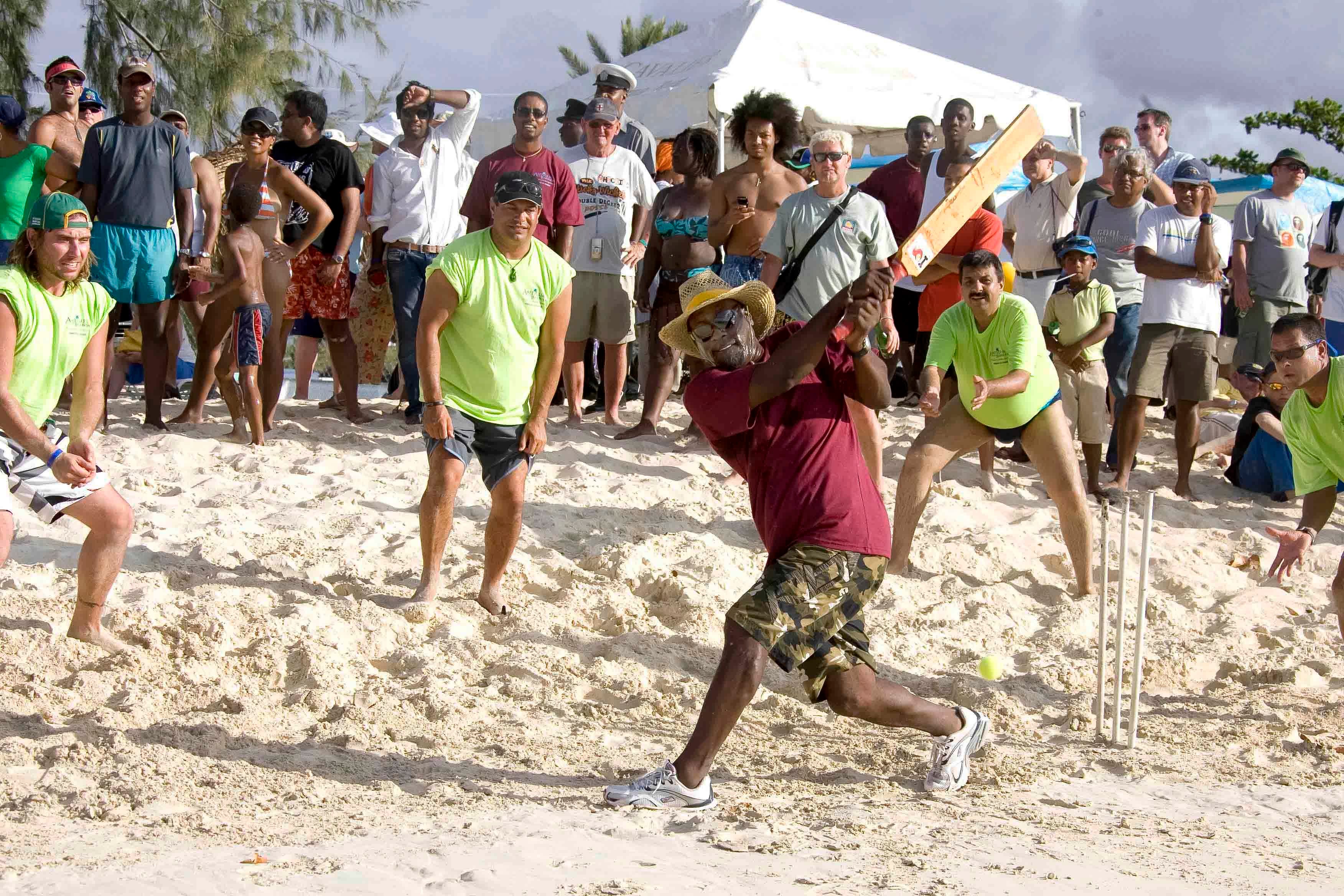
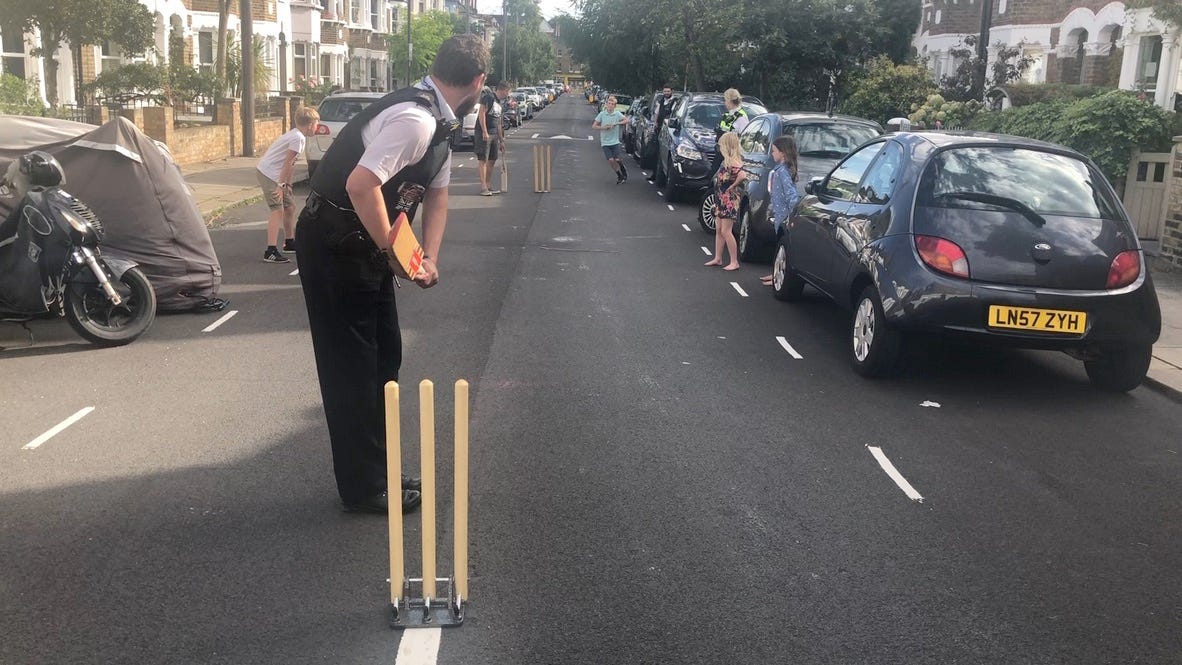
Vaibhav started playing like this. Viv Richards too. I went to the small playground in St John’s Antigua where Viv learnt to bat. If you hit the ball over a low wall into a fisherman’s garden at mid-off, the fisherman never threw the ball back. It was six and out. So Viv trained himself to hit the ball over long on where the wall was much higher and the ball bounced back. That was six and in. Most of the best cricketers in the sub-continent or the Caribbean learned the game like this with tape ball or tennis ball, on yard or street or paddock or even in a gully between houses. No facilities apart from a bit of delineated space. We do this every so often in our street in west London, and soon everyone’s joining in, even the local cops.
Somehow, somewhere we need to get a format like this to catch on. There are willing benefactors out there. It doesn’t need a lot of money. Just a bit of initiative. Watch this space. Having a 15 year old superstar all over the airwaves and socials always helps…
Appreciate the quotes and shout out here Simon. A lovely, British facing piece alongside my recent one on participation. Momentum building for the governance layer to take this seriously for the future of our great sport.